
Last fall, Saigon South International School launched the FIRST Robotics program for high school students. As the first of its kind in Vietnam, it is a major addition to the school’s extensive extracurricular program.
The FIRST Robotics Competition (FRC) is a global program that requires student teams to design, build, and program industrial-sized robots. Their robots then compete in a new game that is released simultaneously around the world.
After the simultaneous release of the game, FRC teams across the globe have only six weeks to compete. It is fast-paced and demanding, with students working on all aspects of design, engineering, coding, and communications. The experience resembles the thrill and intensity of a startup more than a traditional school activity.

Opportunities like FRC let students explore their passions, grow in confidence, and develop as global citizens.
“FRC is basically built like a company,” says SSIS teacher Matt McEwen, who was recruited to help SSIS establish the FRC program in Vietnam. “Students work in different ‘departments,’ such as mechanical, electrical, programming, marketing, and outreach, and then they have to bring it all together under real deadlines. They are applying what they know and proving it in a very real way.”
This is one of the many experiences that reflect a wider commitment to student-centered education and extend learning beyond the classroom for SSIS students. FRC joins an elite lineup of established programs at SSIS, including VEX Robotics and the National Speech & Debate Association (NSDA). Both programs have seen recent global success: SSIS recently hosted Vietnam’s largest-ever VEX competition – qualifying for the World Championships – while nine students secured positions at the prestigious global tournament in the United States.
“We see these experiences as essential. They give students the opportunity to explore their passions, grow in confidence, and develop as global citizens. Over time, it is this combination of academic strength and real-world experience that sets them apart when applying to top universities worldwide,” shares Head of School Dr. Catriona Moran.
FRC builds on that foundation. It brings engineering into a high-pressure, collaborative environment where every decision matters. Each match is followed by a rapid reflection. Back in the pit, students analyze performance, adjust strategy, and make quick technical changes before returning to the arena.
In their first-ever season, the Saigon South Dragons competed in Vancouver, Canada, and Istanbul, Turkey, entering events with long-established international teams. At the Avrasya Regional in Istanbul, they advanced through qualification rounds and were selected as the first alliance partner by a top-seeded team. For a rookie team, this was an impressive result that put them within reach of the finals.

Spirits were high as the team attended their first competition in Vancouver (Canada) earlier this year.
Their performance reflected how they worked. The students iterated quickly, supported alliance partners, and adapted in real time.
“I worked as a Project Manager in our FRC team. It was an opportunity to gain experience closer to the industry I’m pursuing,” shared grade 12 student Jack, who will be attending the Ohio State Honors Engineering Program this fall.
FRC is also grounded in a distinct ethos. Teams compete, but they also support one another. At competitions, it is common to see teams troubleshoot code together, share parts, and help each other stay in the game. SSIS students experienced this firsthand – receiving support in Vancouver, then offering it to others in Istanbul.
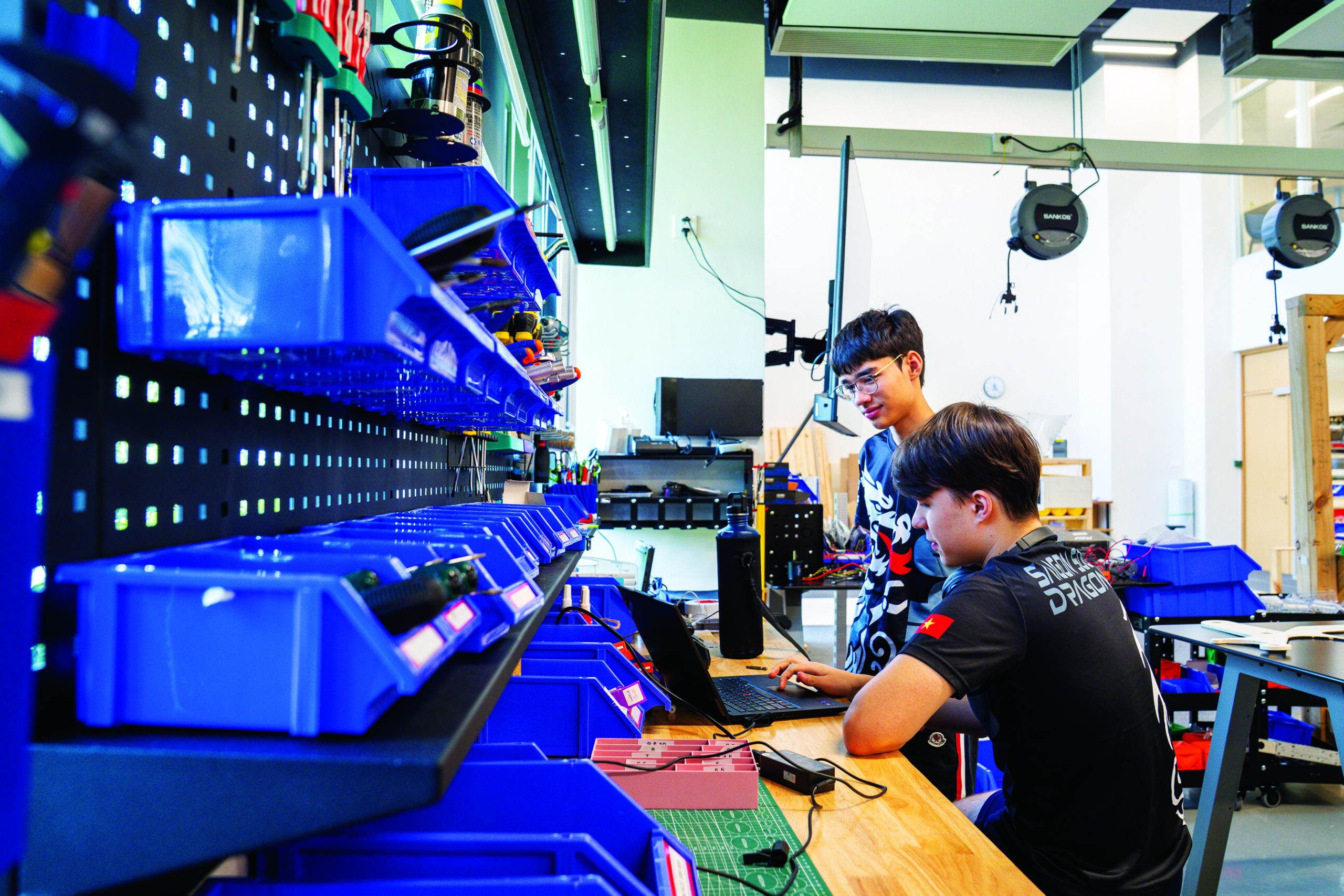
The FRC program is supported by purpose-built facilities on campus, where students can design, prototype, and test in a single space. Continued investment, including advanced fabrication tools, allows students to work with increasing precision and complexity. As a not-for-profit school, SSIS direct these resources right back into student learning.
FRC will continue to grow at SSIS next year, with a more defined structure and expanded opportunities for students to contribute across engineering, communications, and outreach.
The program is one example of how learning at SSIS offers multiple opportunities for students to innovate, problem-solve, apply what they learn, and demonstrate their learning in ways that prepare them for whatever comes next.
Source: SSIS